The Experience Builder: How Quenth Actually Got Here
Introduction
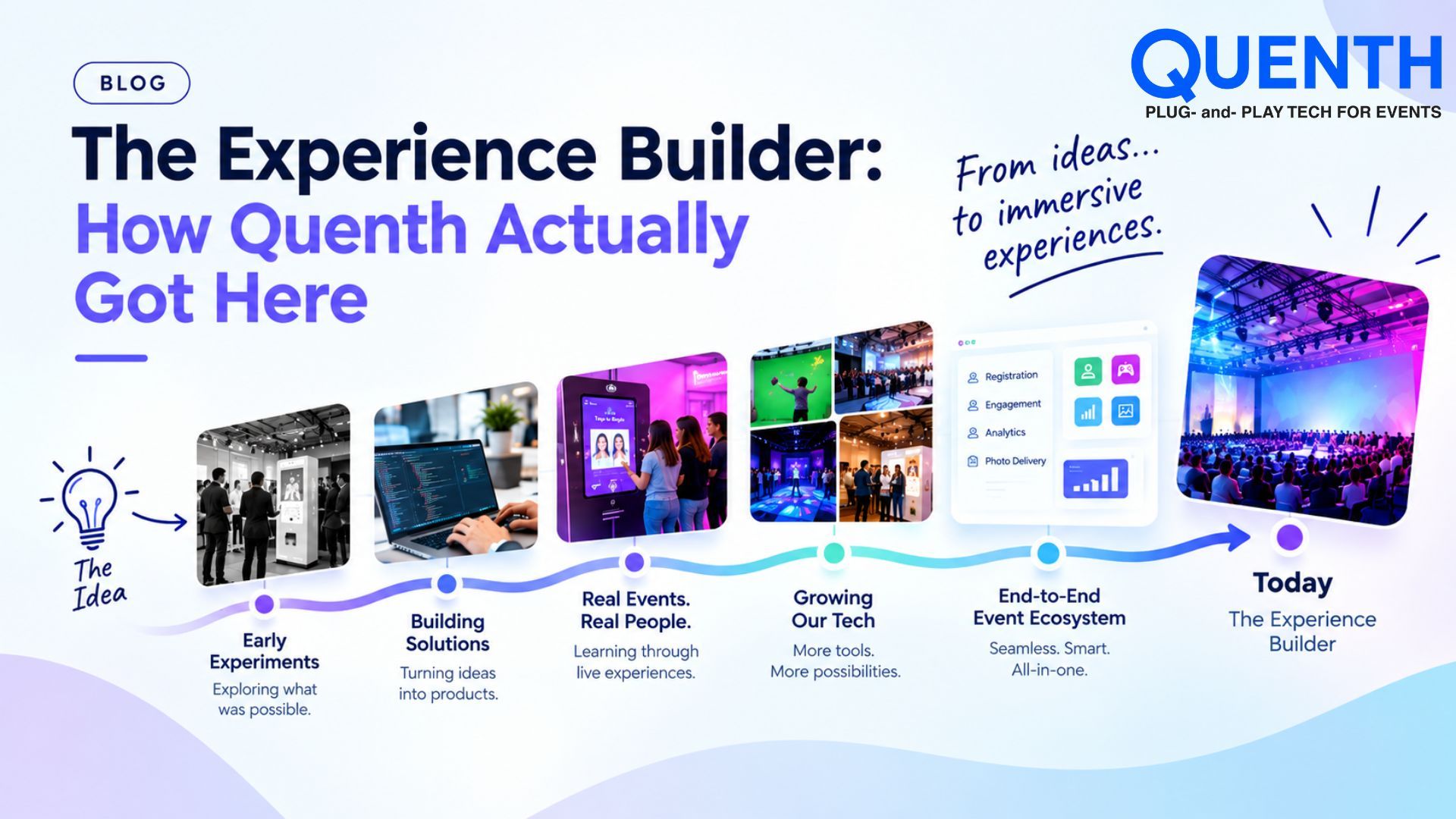
Before there was an Experience Builder, there were just products. AI Photobooth, on its own. Quiz, on its own. Games, walls, an AI bot — each one built and sold as its own thing, solving its own specific problem.
That worked, for a while. But a pattern kept showing up in what clients actually asked for. Almost nobody wanted just one product in isolation. They wanted a lead capture form before the AI photo booth. A gallery or a mosaic wall after it. A quiz that fed into a leaderboard. These weren't unusual, specific requests — they were close to universal. Who doesn't want to capture a guest's details before they step into a photo booth? Who doesn't want the photos to go somewhere after they're taken?
That realization is what changed the architecture entirely, from brand activations to corporate events.
From Individual Products to Composable Nodes
Instead of five separate products with five separate logins, the Experience Builder treats every capability as a node — Lead Capture, Booth, Wall, Crowdplay, AI Bot — that can be added, duplicated, and connected in sequence on one canvas. Add as many nodes as an experience needs. Multiple booths in one flow, if that's what the event calls for. Connect them one after another, and that sequence becomes the actual guest experience — packaged into a single link, ready to use.
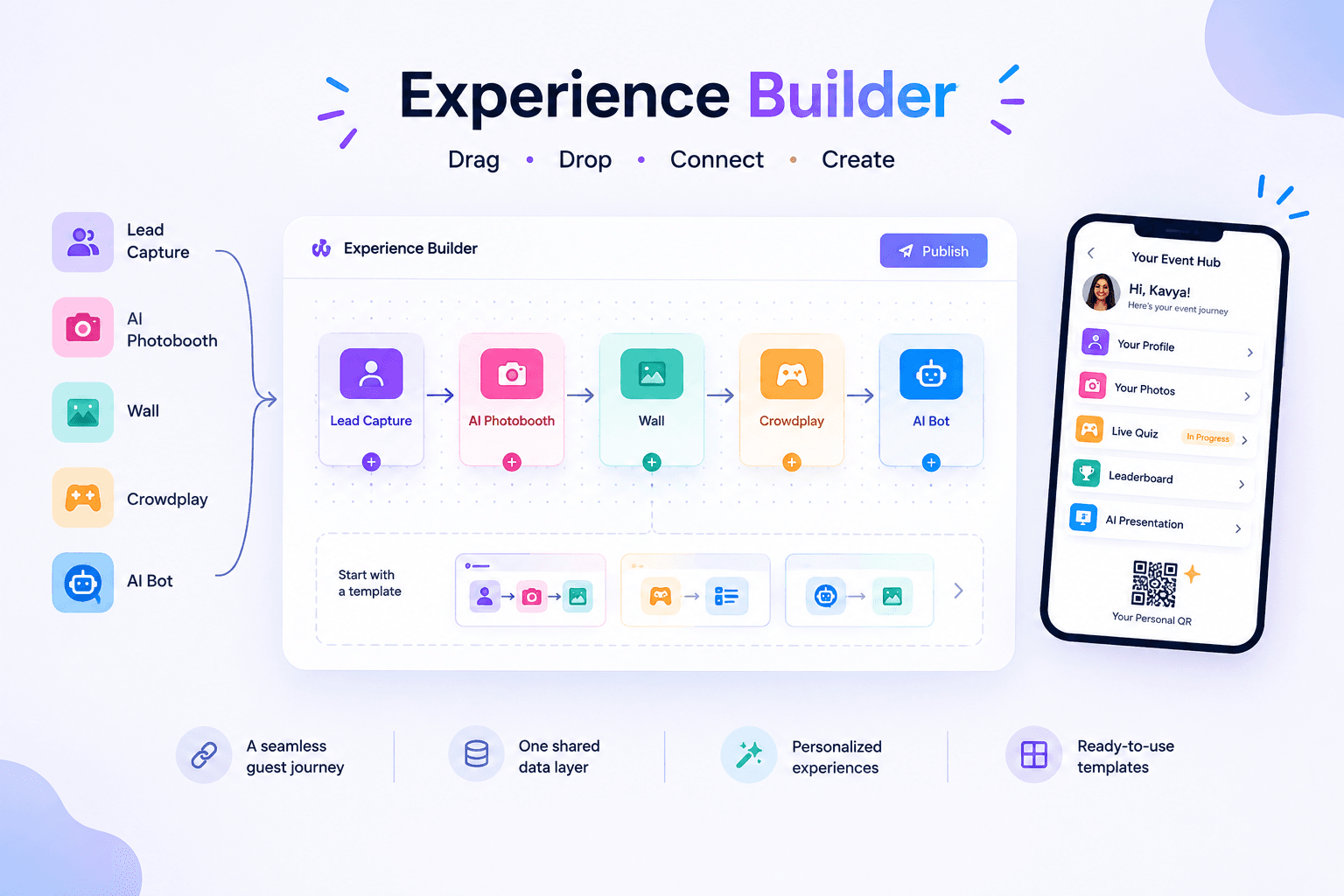
This is the direct answer to what clients were already asking for before the Experience Builder existed: lead capture, then a booth, then a wall, in whatever order and combination a specific event needs for audience engagement, built on one canvas instead of stitched together across separate tools.
A personalization on top of everything
Beyond just moving data between nodes, there's a dedicated personalization layer that shapes what actually gets generated — turning the same base flow into a different, tailored output depending on what a specific guest provided. This is what makes two guests going through the identical flow walk away with genuinely different, individually personalized results, rather than the same templated output with a different name swapped in.
The Welcome Board— one place for the guest to see everything
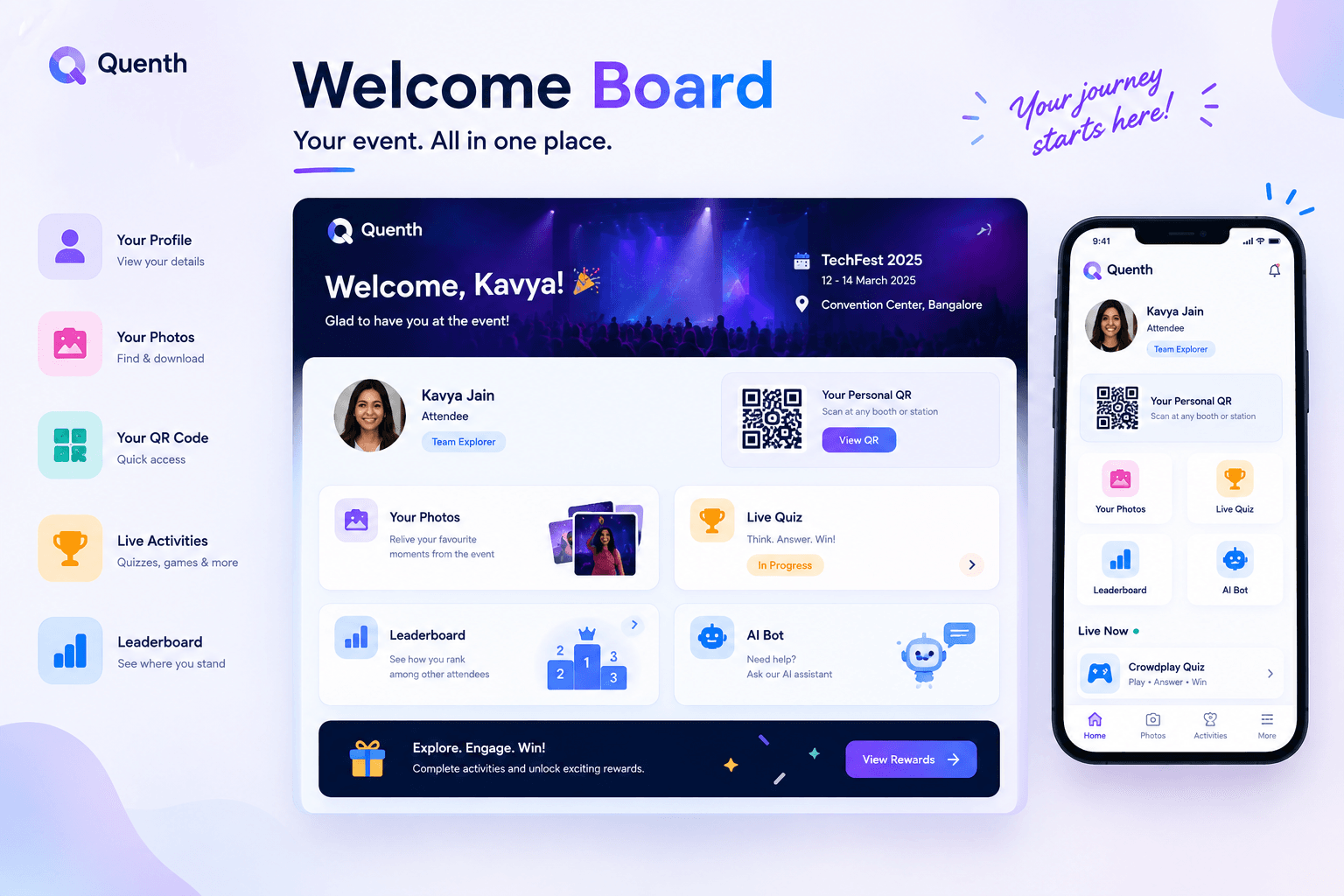
Alongside the builder itself, guests get their own hub for an event — a personal login where they can see their profile, their own personalized QR code, any photos found through Snapfinder, and whatever's currently live for them: a Crowdplay quiz in progress, an Interactive Presentation, a leaderboard they're on. Instead of a guest juggling separate links for separate experiences throughout an event, everything relevant to them lives in one place, on the same platform.
Templates, so nobody starts from a blank canvas
None of this requires building a flow from scratch every time. A library of ready-made templates already exists — drag, drop, and a flow is set up in seconds, ready to customize rather than construct from nothing. The freedom to build any combination of nodes is there when it's needed, but most events don't need to start from zero.
Why this is the actual differentiator
Any single node on this canvas — a good photo booth, a solid quiz, a well-built registration form — can be bought from a specialist vendor who does exactly that one thing well. What can't be bought from five different specialists is a shared data layer, a personalization engine that ties them together, and a single guest-facing hub where all of it shows up in one place. That's not a feature. That's an architecture — and it only exists because enough clients kept asking for the same combinations before it was built this way.
Conclusion
The Experience Builder by Quenth isn't just a product that was thought up because connecting products was a great idea. It was created when clients continued to request experiences that could not be achieved through any single tool.
Quenth is bringing together composable nodes, shared data, personalisation, templates, and the Welcome Board in one architecture and is revolutionising the way event engagement experiences are designed and delivered.
More products aren't the only sign of the future of event technology. It's creating products that already do their job very well, very smoothly, very intelligently — and very personally for each and every guest.
Book a demo to see the Experience Builder in action.
FAQs
How is the Experience Builder different from standalone event tools?
Standalone tools tend to have a specific function. The Experience Builder groups multiple capabilities into a single flow, so they can share data, collaborate, and provide a seamless guest experience via a single link.
Can different nodes share guest information?
Yes. A shared data layer enables nodes to communicate with each other and information gathered in one node to be utilized by other nodes without the need for parallel integration activities or multiple data entry points.
How does personalization work in the Experience Builder?
The personalization layer takes personal information from guests and affects the outputs created throughout the experience. This enables guests to get different outcomes even if their overall flow is identical.
Do organizers have to build everything from scratch?
No, the Experience Builder has pre-made templates to start from common event flows. Organizers can edit these templates or build new experiences by connecting nodes together as necessary.